
youtube.com/@ycrootaccessSept 2014
Lecture 2 - Team and Execution (Sam Altman)
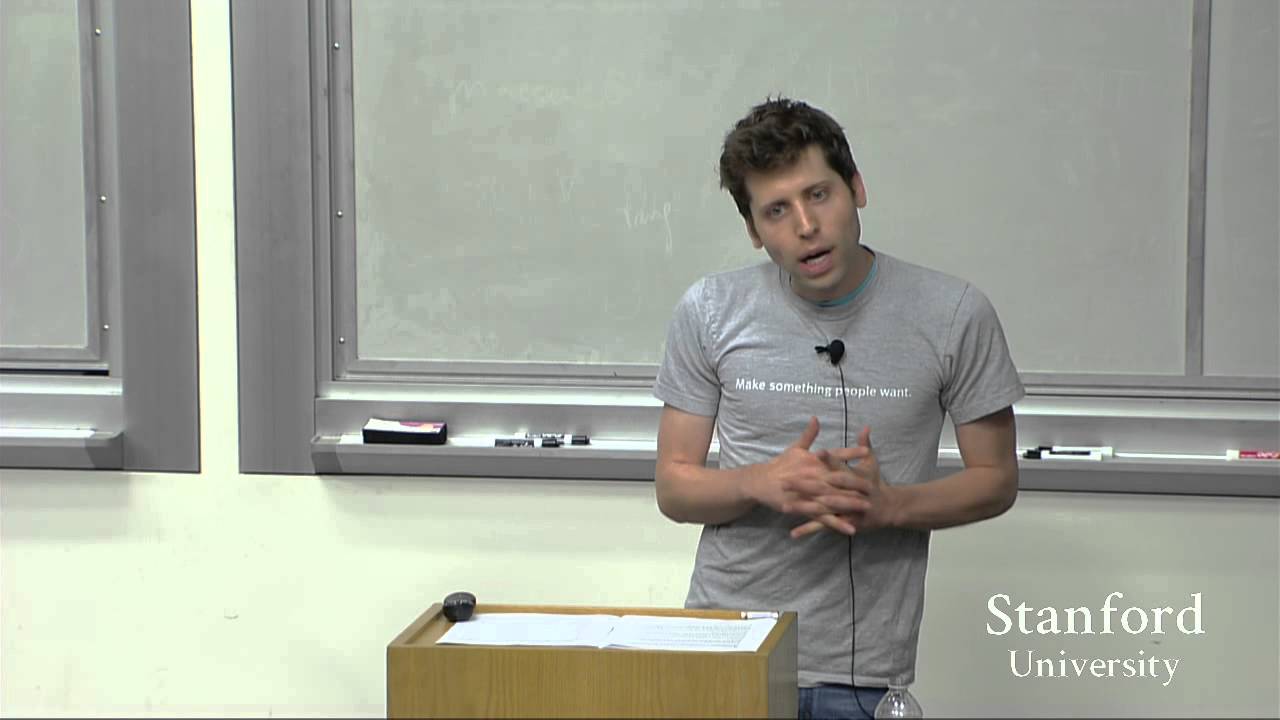
youtube.com/@ycrootaccess
25 Sept 2014 · Startups
46 min watch → 95 sec
Sam Altman lays out how early startups should choose co-founders, hire slowly, manage and fire employees, and execute with focus, speed, and intensity. The central operating rule is to protect momentum through growth, clear priorities, and fast decisions.
A startup lives or dies on product quality, founder quality, and execution. Ideas alone create no value, and founders set culture, speed, and standards.
Choose co-founders and early hires with extreme care. Momentum comes from focus, intensity, speed, and high quality.
02 / 20
Students often spot fast-growing markets early.
What you and your peers start using can predict the future better than formal market analysis.
03 / 20
A startup CEO has 5 core jobs.
01
Set the vision.
02
Raise money.
03
Evangelize the company.
04
Hire and manage the team.
05
Set the execution bar.
04 / 20
Execution means choosing the 2 or 3 top priorities and saying no to almost everything else.
Only the CEO can set how hard and how well the company operates.
05 / 20
Momentum is a startup's lifeblood.
Software startups must keep growing. Hardware startups must not let the ship date slip.
06 / 20
When momentum stalls, teams get demoralized, conflict rises, and the company starts to unravel.
Recovery usually comes from small wins, often in sales or product.
07 / 20
0.99 vs 1.01
A viral coefficient below 1 dies, above 1 grows exponentially.
A tiny improvement in the right place can decide the company.
08 / 20
Choosing a co-founder is one of the highest-stakes startup decisions.
The safest pattern is a co-founder you already know well.
09 / 20
9 of about 75
YC companies added a random co-founder between interview and batch start.
All 9 teams fell apart within a year.
10 / 20
A bad co-founder is worse than being a solo founder.
A strong co-founder is still better. Sam Altman estimated all top 20 YC companies had at least 2 founders.
11 / 20
YC's best founding team size is 2 or 3.
01
1 founder is usually weak.
02
2 founders works well.
03
3 founders works well.
04
4 founders sometimes works.
05
5 founders is usually bad.
12 / 20
Remote co-founding is a major early-stage disadvantage.
Fast communication and cycle time matter, and Sam Altman could not name a top software startup with separated co-founders.
13 / 20
The best early co-founders share these traits.
01
They are resourceful.
02
They are tough.
03
They stay calm and decisive.
04
They are creative under pressure.
14 / 20
For software startups, a technical founder is usually essential.
Non-technical founders who plan only to hire and manage engineers usually fail.
15 / 20
Early hiring should be slow and selective.
One mediocre employee in the first 5 to 10 hires can poison culture or kill the company.
16 / 20
5 months
Airbnb spent this long interviewing its first employee.
It hired only 2 people in its first year and wrote cultural values before hiring anyone.
17 / 20
Hire early only for desperate need.
01
More employees raise burn.
02
More employees add complexity.
03
More employees create tension.
04
More employees slow decisions.
18 / 20
When you are actively hiring, recruiting becomes a top founder priority.
Great candidates have many options and may take a year to convince.
19 / 20
20 / 20
Carouse
Turn any article, video, or podcast into a carousel you can browse in 30 seconds.