Most founders describe what their product does and hope the right buyer recognizes themselves. The pattern across these talks is the reverse. Positioning starts by naming who the product is best in the world for, and just as importantly who it is not for. A target market is a set of shared needs, not a demographic, and the narrowest honest segment usually wins more customers, not fewer, because the message finally lands on someone. This collection walks the arc, what positioning actually is, how to find who it is really for, how to pick the beachhead segment, why niching down expands reach, why great positioning excludes on purpose, how to stand out inside a crowded category, and how positioning has to shift as the product and the market mature.
Founders lose deals by describing the tool instead of naming the person it is for. The pattern across these talks is consistent: positioning is not a tagline you polish at the end, it is the decision about who your product is best in the world for and who should pick an alternative instead. Get that decision right and the messaging, the pricing, and the roadmap all get easier. Below is the arc as carousels, core claims first, with a link to the full talk or essay under each.
What positioning actually is
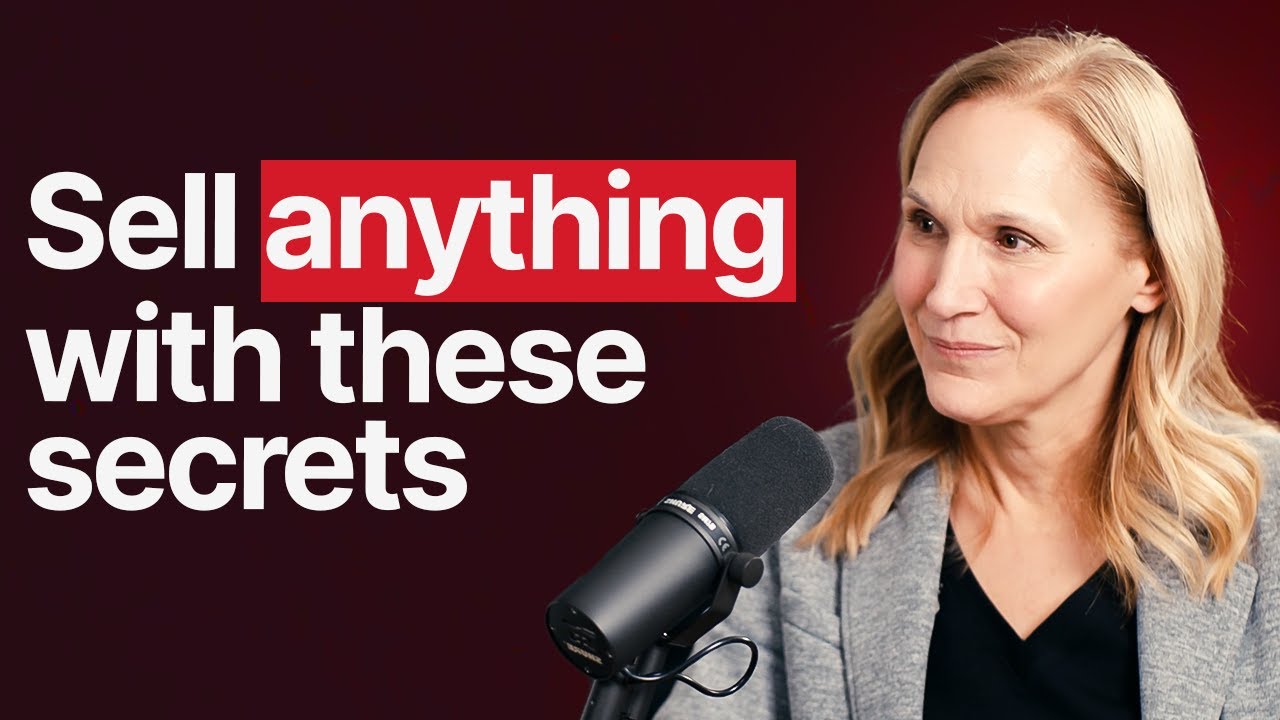
Positioning defines how a product is the best in the world at delivering specific value to a well-defined customer group. April Dunford’s frame sets the context that tells a buyer what a product is, why it is different, and who it is for, before they judge the price or the features. In B2B the safest path is usually to dominate a narrow niche first, then expand as buyers gain confidence.
The Marketing Expert: Sell Anything with this Trick | April Dunford
youtube.com/@tkppodcast
27 Feb 2024 · Marketing
72 min watch → 3 min
A strong product position sets the context that tells buyers what a product is, why it is different, and who it is for. In B2B, the safest path is often to dominate a narrow niche first, then expand as buyers gain confidence.
Positioning fundamentals
Positioning defines how a product is the best in the world at delivering specific value to a well-defined customer group
It sets the context that tells buyers what alternatives you compete with, what value to expect, who buys it, and what price feels plausible
2 / 19
A product can stay technically the same while its position changes completely
Calling double chocolate salted caramel cake a muffin shifts competitors from desserts to breakfast foods, changes expected price, and reframes the use case
3 / 19
Many companies never deliberately choose a position, they inherit it from the founder's original idea
Over time the product evolves until customers no longer see it the way the company does
4 / 19
Calling a product a CRM instantly triggers assumptions: competing with Salesforce, serving a head of sales, tracking deals through a pipeline
The category label, customer relationship management system, sets buyer expectations for features, users, and pricing below the category leader
5 / 19
At Jana Systems, competing as enterprise CRM against Siebel failed because Siebel had 2 billion in revenue while Jana had 2 million
Repositioning as CRM for investment banks worked because one distinctive feature solved a problem Siebel could not address in that segment
6 / 19
The most common way tech companies win against a dominant incumbent is to position for an underserved subsegment, dominate that niche, then expand outward
A narrow initial position can be the first step in a sequence: CRM for investment banks, then retail banking, then insurance, then broad enterprise CRM
7 / 19
Salesforce started below enterprise CRM, selling cloud-hosted CRM to small businesses without IT departments, then moved upmarket while Siebel ignored that segment
8 / 19
B2B positioning differs from consumer positioning in three ways
1
Purchases usually involve 5 to 11 stakeholders, not one buyer
2
Buyers need an explainable business case to justify the decision
3
Value is judged mainly on helping a company make money or save money
9 / 19
B2B purchase processes
40 to 60%
of B2B purchase processes end in no decision because fear of making a bad choice stops buyers
Positioning must help buyers confidently choose you over alternatives and over doing nothing
10 / 19
A homepage should communicate three things within seconds
1
Who the product is for, the specific customer group it serves
2
What differentiated value it delivers that alternatives do not
3
Why that difference is worth paying for
11 / 19
Weak positioning creates false assumptions that sales must undo, while strong positioning makes buyers quickly understand what the product is and why it matters
12 / 19
A common positioning failure is mistaking features for value
Buyers often understand what a feature does but still do not understand why it matters enough to pay for it
13 / 19
Repositioning cannot fix a product with no real market
A database that reduced a three-day bank query to seconds only solved an urgent problem for about 10 companies worldwide, making the addressable market too small
14 / 19
Customer discovery, interviewing potential buyers before building, tests assumptions about pain, willingness to pay, and market size
Startups often skip it or get misleading answers that later force a pivot
15 / 19
Positioning should be judged by buyer response, not by whether a general audience understands it
Specialized B2B products only need to resonate with the specialized buyers who actually purchase them
16 / 19
Positioning is not a marketing-only exercise because changing competitors, target customers, and differentiated value changes the business itself
Product, sales, marketing, customer success, support, and the CEO should align on positioning together
17 / 19
Category creation only makes sense when a genuinely new market is emerging
Forcing a new category when a product clearly fits an existing one usually confuses buyers who just want to know which familiar bucket it belongs in
18 / 19
Read the full source
The Marketing Expert: Sell Anything with this Trick | April Dunford
Target markets map better to shared needs, workflows, and buying context than to age, gender, company size, or geography. Jason Cohen argues the real market is the set of customers whose testimonials would persuade one another to buy. Large companies buy SMB software because individual teams share the same needs as small-business buyers, so demographic targeting both misses real buyers and wastes effort on non-buyers.
Your target market isn’t demographic
longform.asmartbear.com
26 Jul 2026 · Marketing
12 min read → 75 sec
Target markets often map better to shared needs, workflows, and buying context than to age, gender, company size, or geography. Customer interviews, best-customer analysis, and testimonial fit reveal the real segment.
Target markets are defined by shared needs, not demographics
Demographic targeting misses real buyers outside the named group and includes non-buyers within it
02 / 14
Marketing should speak to the traits that drive buying: genre, workflow, status, or desired identity
Demographics describe who people are, not why they buy
03 / 14
A practical target market is the set of customers whose testimonials would persuade one another to buy
04 / 14
Large companies often buy SMB software, because individual teams share the same needs as small-business buyers
Firmographic boundaries miss these cross-segment buyers
05 / 14
An email client's real market hinges on workflows: high-volume inboxes, assistants, security, outbound campaigns, or support desks
Not on company size or industry
06 / 14
WP Engine won large-company customers without enterprise positioning
Many teams needed enterprise-grade WordPress at lower-than-enterprise prices
A strong value proposition starts with a narrow customer segment, a painful problem, and a gain that outweighs the cost of switching. This Harvard i-lab framework defines a minimum viable segment as one group with similar needs, then tests whether the problem is urgent, underserved, and worth building for. A well-stated problem is half solved, and the segment is where you state it.
Value Props: Create a Product People Will Actually Buy
youtube.com/@harvardilab
1 Apr 2023 · Startups
87 min watch → 70 sec
A strong value proposition starts with a narrow customer segment, a painful problem, and a clear gain that outweighs the cost of switching. The framework tests whether a startup idea is urgent, underserved, defensible, and worth building.
A value proposition starts by defining a narrow customer segment and testing whether its problem is valuable enough to solve.
When users and payers differ, satisfy both, but start with the user. A strong offer is disruptive, discontinuous, and defensible.
02 / 19
Define customers by asking users directly.
Founders need the customer's view, not their own assumptions.
03 / 19
A minimum viable segment is one group with similar needs.
That group can buy the same product repeatedly without product changes.
04 / 19
A well-stated problem is half solved.
Clear pain and a clear customer focus the product.
05 / 19
A problem is worth pursuing when it is:
01
Unworkable.
02
Unavoidable.
03
Urgent.
04
Underserved.
06 / 19
An unworkable problem has severe consequences if ignored.
People can get fired or suffer major harm.
07 / 19
An unavoidable problem is tied to realities people cannot escape.
Taxes, aging, health needs, and education create large markets.
08 / 19
An urgent problem outranks other demands on time, money, and attention.
Ask customers for their number one priority first.
09 / 19
An underserved problem lacks an adequate solution.
The available option is missing, overpriced, or in the wrong form.
10 / 19
Business-to-consumer products often start with latent or aspirational needs.
The strongest ones become critical in specific use cases.
11 / 19
A complete solution needs external dependencies such as:
01
Networks.
02
Apps.
03
Charging stations.
04
Partners.
12 / 19
Evaluate a value proposition with two tests:
01
Compare before and after.
02
Measure the gain-pain ratio.
13 / 19
10x
is a common improvement needed to overcome inertia.
Consumer thresholds can be lower. Complex enterprise thresholds can be higher.
14 / 19
Customers adopt only when gain outweighs switching pain.
Switching pain includes finding, trying, buying, learning, and trusting something new.
15 / 19
A strong startup offer is:
01
Disruptive.
02
Discontinuous.
03
Defensible.
16 / 19
Defensibility can come from intellectual property, switching costs, network effects, contracts, or proprietary data.
Embedded products become harder to leave.
17 / 19
Product-market fit is strongest when founders uniquely understand and solve the problem.
That value proposition also needs a sustainable business model.
18 / 19
Read the full source
Value Props: Create a Product People Will Actually Buy
Niching down expands reach rather than limiting it. A specific target makes the message resonate, supports higher pricing through specialization, and helps the product stand out in a crowded market. The counterintuitive part for founders is that broadening the audience to catch everyone usually means the message lands on no one.
Why Niching Down Gets You More Customers Not Fewer
youtube.com/@lifestylebusinessacademy
3 Sept 2026 · Business
2 min watch → 1.5 min
Niching down in business can expand reach rather than limit it. A specific target makes messaging resonate more strongly, supports higher pricing through specialization, and helps a business stand out in crowded markets.
Choosing a very specific target customer brings more customers, not fewer
A narrow target makes marketing clearer and more persuasive than trying to sell to anyone. The target is the aiming point, not the full market, so a message built for one group attracts nearby groups too.
In marketing, aiming at a bull's-eye gives a better chance of hitting the target than firing in a random direction
The archery analogy: a precise aim improves your odds, even if some arrows land outside the center.
A message tailored to rich men in the US in their 40s recovering from surgery feels directly relevant to that group
Specificity makes the offer resonate strongly with the exact person it describes.
Highly targeted messaging spills over to adjacent customers: slightly older or younger men, people with similar recovery problems, or women recovering from surgery
The narrow target is the aiming point; nearby groups with similar needs still see themselves in the message.
“
The target is not the market. The niche you aim at is narrower than the total set of people who may still buy from you.
A broad target like anyone makes customer acquisition harder, because the offer and message are too vague to strongly resonate with any one group
When buyers need a specialized outcome, they prefer a specialist over a generalist
Example: choosing a wedding photographer instead of a generic photographer for a wedding.
A wedding photographer can charge more than a general photographer offering the same core service
Adding a niche label raises prices because customers associate specialization with expertise and fit for their specific problem.
When does being a generalist work better?
/
In a market with little or no competition
/
When customers have few alternatives to compare against
/
When buyers do not need a specialist because no one else offers one
BROADSIDE
NO. 10
/ CAROUSE
10 / 13
When there are five zillion competitors offering the same general service, narrowing the niche improves cut-through
Cut-through is the ability to be noticed and remembered in a crowded market.
In crowded markets with many similar providers, niching down is often necessary to stand out and win attention at all
Read the full source
Why Niching Down Gets You More Customers Not Fewer
A brand is the story and promise people hold in their minds, not a logo, and positioning works by clearly excluding as well as including. Seth Godin frames it as a generous act that tells busy people who a product is for and who should choose an alternative instead. As AI replaces routine marketing competence, the value shifts to distinctive work and permission-based relationships, which start with knowing exactly who you serve.
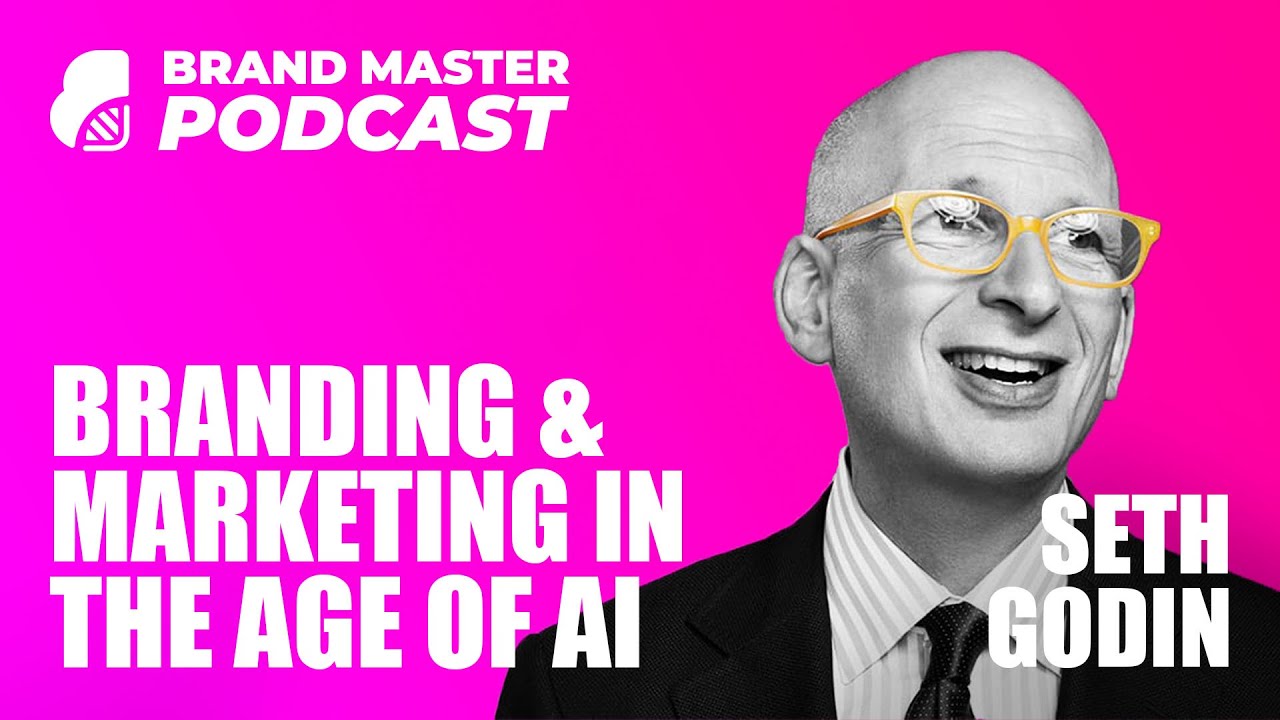
Branding & Marketing In The Age Of AI with Seth Godin
youtube.com/@brandmasteracademy
13 Feb 2024 · Marketing
42 min watch → 3.5 min
Branding is the story and promise people trust, positioning works by clearly excluding as well as including, and narrow markets create relevance. AI is replacing routine marketing competence, so value shifts to distinctive work, tension, and permission-based relationships.
Seth Godin on branding, positioning, and AI
A brand is the story and promise people hold in their minds, not a logo, and positioning is a generous act that tells busy people who a product is for and who should choose alternatives instead
The smallest viable market, a narrowly defined group most likely to care, is the most important strategic choice because specificity creates relevance, and AI is the biggest change since electricity, replacing routine competence and leaving human value in distinctive work
02 / 19
A brand is not a logo or a color scheme, it is the story and promise people hold in their minds about you
Strong branding earns trust by shaping how other people think and feel when they encounter your work
03 / 19
A logo gains power from the brand attached to it, not from graphic quality alone
People admire logos tied to trusted brands and ignore equally strong symbols tied to things they reject
04 / 19
Positioning is a generous act, not a battle, because it tells busy people clearly who a product is for and who it is not for
Good positioning also tells people which alternatives they should choose instead, making their decision easier
05 / 19
A useful positioning map needs two valid axes, meaning each quadrant must represent something some customers genuinely want
A fake contrast like good versus bad creates a useless map because no one wants the bad quadrant
06 / 19
Strategy is the work of making change happen over time, while tactics maintain or execute within an existing system
Brand strategy requires choices about positioning, competition, and how the market will be different tomorrow
07 / 19
The smallest viable market, a narrowly defined group of people most likely to care, is the most important strategic choice a brand makes
Specificity creates relevance and can still grow into a very large business over time
08 / 19
Many people avoid choosing a narrow audience because if that audience does not respond, they cannot blame the market
Broad targeting usually hides weak strategy behind the claim that the product is for everyone
09 / 19
Customers do not buy features, they buy benefits, so a product detail matters only if it leads to an outcome the buyer wants
Button-fly jeans matter only if they help the buyer look attractive or achieve another goal they care about
10 / 19
Stories that move people usually connect to status, fear, or affiliation
01
Storytelling works by reaching the emotional part of the brain
02
Effective stories become part of how people see themselves
03
The failure of New Coke showed buying behavior can be tied to identity and memory
04
For many people in Georgia, drinking Coca-Cola for breakfast was linked to family safety, not just taste
11 / 19
A practical persuasion tactic is to frame the default choice socially, as in the Wheeler method of asking soda fountain customers 'one egg or two,' which increased add-ons by making zero feel outside the norm
Seth Godin on framing defaults
12 / 19
Permission marketing, earning ongoing attention from people who want to hear from you, is a durable asset
It lets you serve readers directly instead of constantly chasing strangers with spam
13 / 19
Consistency matters more than authenticity, because customers do not want whatever mood you happen to be in
They want the best version of you delivered with integrity every time
14 / 19
Artificial intelligence is the biggest change since electricity, and professionals should use it daily because AI already replaces routine competence
Human value now lies in work that is distinctive enough that AI cannot do it
15 / 19
AI is especially dangerous for work like naming and basic logo generation, because a prompt can produce 100 brand names or many usable logo options faster and cheaper than a human doing average work
16 / 19
Change in creative work is normal, so professionals displaced by AI should treat it like the shift from ditch digging to operating a steam shovel
Use the new tool to multiply your output instead of resisting the change
17 / 19
To grow an unfunded startup, create tension and build network effects
01
Make people feel their life improves if they act now
02
Create fear they may be left behind if they do not act
03
Build network effects so the product works better as more people use it
04
This approach lets you grow without advertising spend
18 / 19
Read the full source
Branding & Marketing In The Age Of AI with Seth Godin
Once you know who it is for, you still have to feel different on the shelf. This founder grew a physical-product brand to eight figures through pattern disruption, a deliberate 10% difference in packaging, format, or marketing that feels new but stays easy to use. The lesson is that differentiation is a specific, small, repeatable choice, not a reinvention of the whole category.
$10M Founder: The Formula She Used to Grow a Viral Brand TWICE
youtube.com/@theanatomyofadream
31 May 2026 · Business
85 min watch → 3.5 min
A founder explains how she grew CharCharms to eight figures through customer validation, organic social media, retail outreach, and product differentiation. The conversation covers TikTok, LinkedIn, community, packaging, and retail pitching.
Building a viral brand from zero to $10M
Stand out with pattern disruption, a deliberate 10% difference in packaging, format, or marketing that feels new but easy to use
Validate demand by interviewing 100 customers before heavy branding investment. Organic social drives growth when the founder posts frequently and measures sales, not views
2 / 20
An oversaturated market rewards pattern disruption, a deliberate 10% difference that makes a product feel new while staying familiar
The difference can appear in packaging, product format, marketing angle, or presentation
3 / 20
Map every competitor, collect screenshots into a mood board, then look for unused colors, fonts, shapes, or formats instead of copying the category default
This process reveals white space where a brand can differentiate without confusing customers
4 / 20
Marketing disruption reframes who the product serves, as Dude Wipes did by taking wipes associated with babies and branding them for men
Black packaging, masculine language, and UFC sponsorships repositioned the same product for a different audience
5 / 20
Product design disruption solves a real complaint in a new format, as Kitsch did by turning shampoo into solid bars that reduce plastic and travel easier
The format change addressed customer pain points while standing out on shelf and online
6 / 20
20%
increase in purchase likelihood when packaging is good
Packaging directly affects buying behavior, making visual differentiation a revenue driver
7 / 20
Validate demand before investing in branding, websites, or paid ads
1
Interview 100 potential customers about the problem and product
2
Get 100 people to use the product and give feedback
3
Ask what they think it is, what problem it solves, and how much they would pay
4
Use easy formats like checkboxes or scales, not open-ended questions
5
Do not assume you are the customer
8 / 20
Organic social media drove revenue from zero to $10 million with no paid ads, no investors, and a small team
The founder posted frequently, tested formats, and measured sales instead of views
9 / 20
TikTok is stronger for broad discovery and viral reach, while Instagram is better for nurturing a niche audience that returns for the same topic
The two platforms serve different jobs in a content strategy
10 / 20
Content that stops scrolling usually contains the unexpected, such as public interactions or strange product use
Viewers keep watching when they do not know what will happen next
11 / 20
Reply-to-comment videos create instant credibility because the visible comment signals prior interest
Comparison videos can trigger comments and virality by inviting disagreement
12 / 20
Engagement signals like comments help TikTok keep pushing a video, so tactics that provoke responses increase distribution
Controversy or obvious mistakes can trigger the comments that boost reach
13 / 20
A viral content series is only worth repeating if it drives purchases, because a video can get 5 million views while Shopify sales stay at zero
Measure content success by revenue, not view count
14 / 20
Retail products now benefit from built-in viral moments, meaning the product itself should look striking or behave in a way people want to film
Design for shareability on camera, not just shelf appeal
15 / 20
TikTok Shop works better after a brand already has momentum, because weak early sales train the platform to treat the product as dead
Most brands use TikTok Shop for discoverability rather than profit
16 / 20
Affiliates on TikTok Shop usually want payment unless a product is already selling, so the founder often creates the initial sales flywheel alone
Act as the first affiliate to prove the product can convert before recruiting others
17 / 20
A product becomes a lasting brand when it builds community around a shared problem or identity
Trends spike from exposure but fade when there is no ongoing relationship with customers
18 / 20
LinkedIn helps founders reach retail buyers when they post consistently about wins, losses, and industry insights
1
Most people rarely post, so active founders stand out
2
Send personalized messages and reference comparable partners
3
Follow up repeatedly and support outreach with recent posts
4
Use the platform to build credibility before asking for meetings
19 / 20
Read the full source
$10M Founder: The Formula She Used to Grow a Viral Brand TWICE
Successful B2B tech products shift positioning several times as they mature, unlike established consumer products that usually keep the same one. April Dunford separates the long-term vision from the current message, so a startup can talk to investors about where it is going while positioning honestly for the buyer it can win today. Repositioning is a planned move, not a sign the first attempt failed.
Shifting Positioning - Why B2B Tech is Different
aprildunford.substack.com
28 Mar 2024 · Marketing
5 min read → 30 sec
B2B tech products often need planned positioning shifts as they mature, unlike established consumer products that usually keep the same positioning. That changes how teams separate vision from current messaging, talk to investors, and review positioning.
Successful B2B tech products shift positioning several times as they mature
B2C products launch new brands for new markets instead
02 / 08
Established B2C products rarely reposition. They launch new products for new markets instead.
Juicy Fruit kept its core positioning since the 1890s, while Wrigley launched Doublemint, Hubba Bubba, and Extra separately.
03 / 08
B2B tech products shift positioning multiple times as the product matures.
One retail startup planned shifts from assisted shopping, to in-store mobility, to an omnichannel retail platform.
04 / 08
B2B positioning must sell the product as it exists now, not the longer-term vision.
05 / 08
Customer positioning and investor positioning should differ for B2B products.
06 / 08
B2B teams need a repeatable process to review and adjust positioning over time.
A practical cadence is a positioning check-in every six months, plus emergency reviews after major market changes.
Rapid AI feature changes do not automatically require new positioning. April Dunford’s three-step check separates a feature change from a real shift in customer value, so teams stop rewriting the message every time they ship. Knowing when to hold positioning steady is as much a discipline as knowing when to move it.
Shifting Positioning When AI Capabilities are Rapidly Changing
aprildunford.substack.com
3 Sept 2026 · Marketing
4 min read → 30 sec
AI products can gain new capabilities so quickly that positioning feels unstable. A three-step check helps separate feature changes from real shifts in customer value that require repositioning.
Rapid AI feature changes do not automatically require new positioning.
Positioning changes when new capabilities create new customer value, not when they only strengthen existing value themes.
02 / 09
Value themes usually change more slowly than features.
Messaging details shift more often than high-level positioning.
03 / 09
Positioning built on customer value is more stable than positioning built on feature lists.
04 / 09
Recheck positioning in three steps.
01
List competitive alternatives.
02
Name distinct capabilities.
03
State differentiated value.
05 / 09
New positioning starts when new AI capabilities create new customer value.
Stronger capabilities alone do not require it.
06 / 09
An application security product keeps its positioning when stronger Anthropic responses still support better incident response.
07 / 09
The same product needs new positioning when Anthropic enables compliance-audit automation.
That capability adds unrelated customer value.
08 / 09
Read the full source
Shifting Positioning When AI Capabilities are Rapidly Changing
The founders who struggle with positioning usually treat it as a wording problem, something to fix in the headline. What these talks describe is a decision made much earlier: who is this best in the world for, and who should pass. Name that group by their shared needs, pick the narrowest honest segment, and let the exclusion do the work. Then revisit it as the product and the market change, because the right answer at seed is rarely the right answer at scale. Save the carousels worth revisiting, and when one earns your full attention, the original talk is linked under it.